
UAV airbags
Airbags absorb the impact energy of unmanned platforms that land under a parachute and carry no landing gear.

What airbags are for
Airbags are a critical component of advanced UAV recovery systems. Similar to automotive airbags, these military-grade inflatable energy absorption systems protect the platform from structural damage upon impact, improving mission success rates and extending operational lifespan.
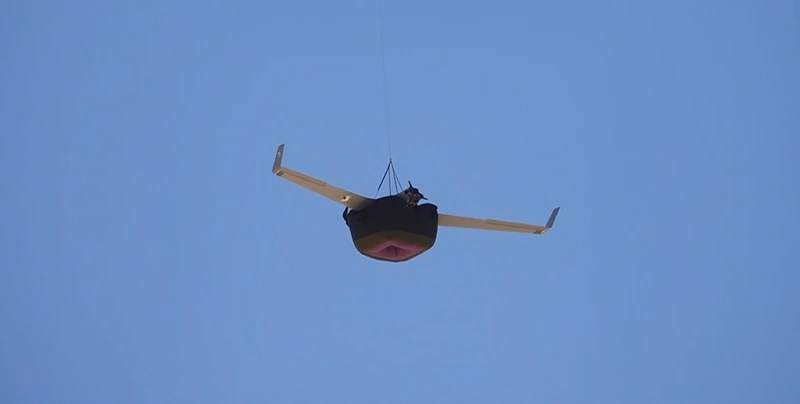
Sizing belongs in the design phase
Airbags should be incorporated during the initial platform design phase, in close collaboration with the manufacturer, not afterwards: only then does the system match the fuselage structure and mission profile. They perform best when descent is vertical and predictable. Designed incorrectly — particularly for parachute-assisted recovery with wind drift — an airbag behaves like a rolling ball and tips or rotates the UAV instead of suspending it.
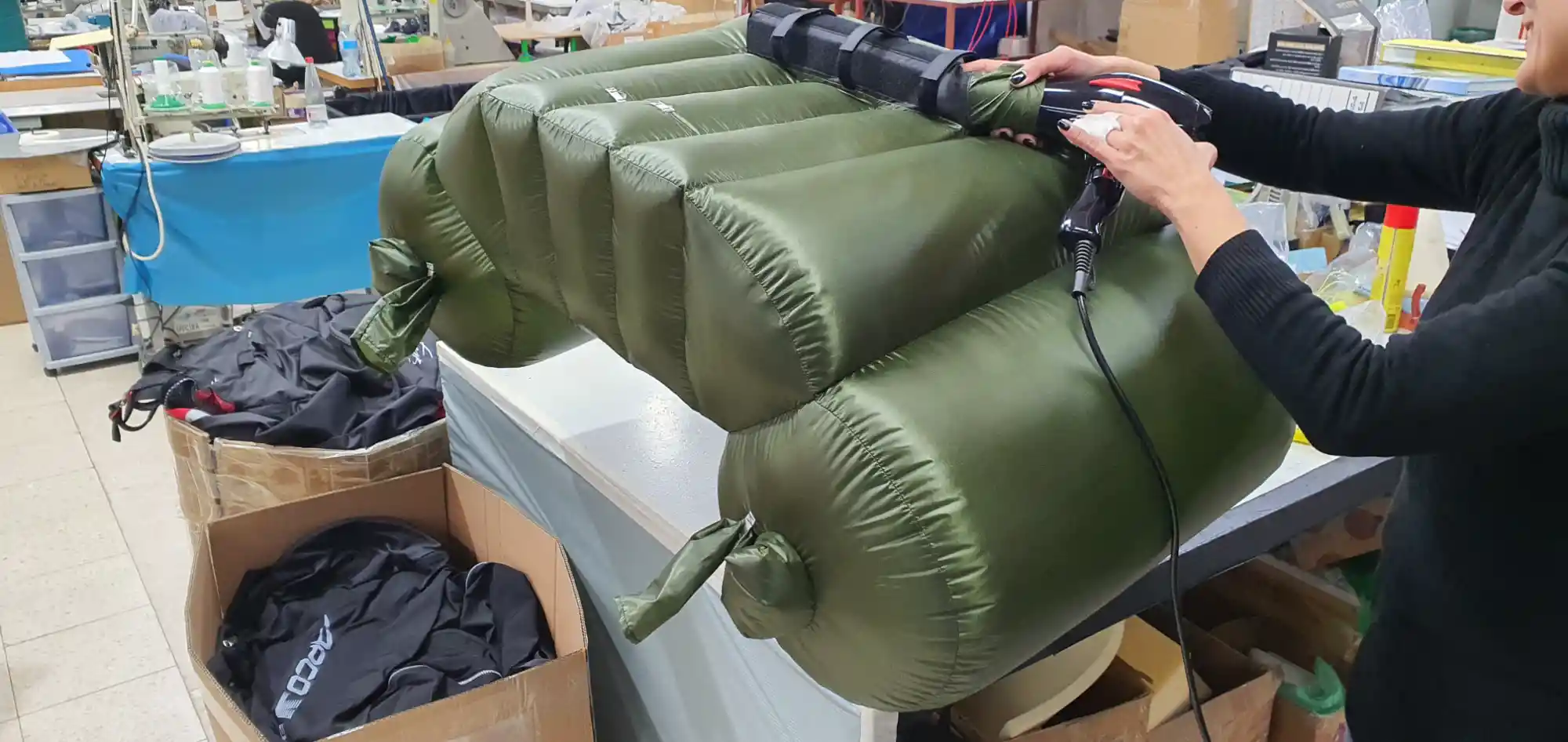
Types
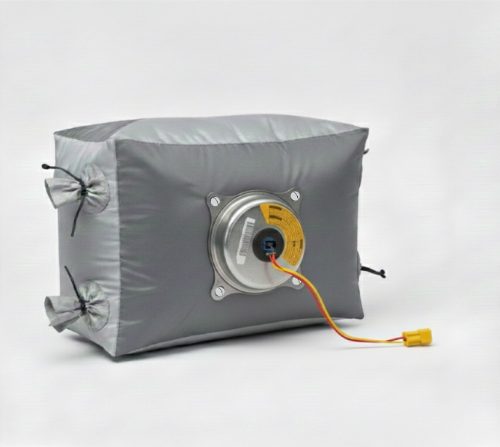
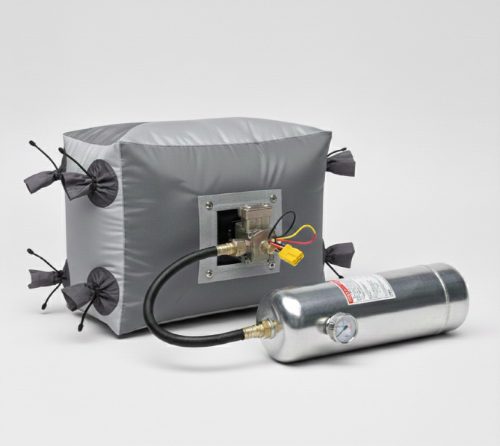
The manufacturer provides lightweight, low-bulk, high-strength airbag solutions built to meet defence and aerospace standards. How the airbag is inflated determines inflation time, internal pressure, packed volume and transportability:
A further variant is inflation with compressed air from a pressure cylinder.
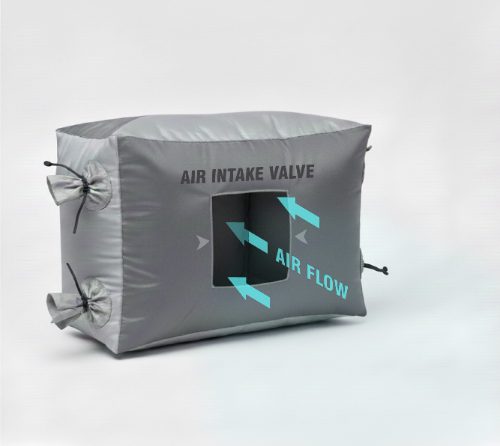
- Self-inflatable: fills from airflow during parachute descent, adapted from paragliding harness impact protection. Light, but requires more storage volume.
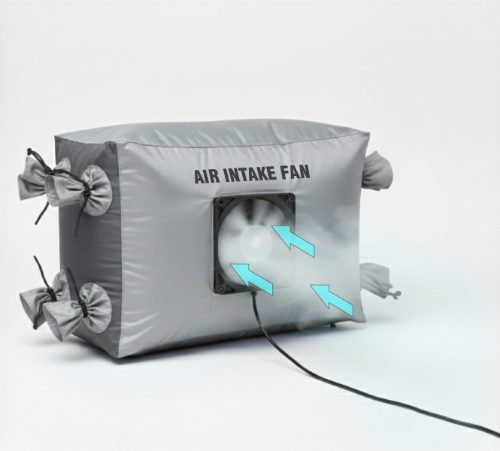
- Fan-inflating: ducted fans give rapid inflation, can be combined with self-inflation valves, and reach higher internal pressure and stability.
- Pyrotechnic: similar to automotive airbags; fastest inflation at high internal pressure, single use seconds before impact, requires sensors and altitude measurement and may face transport restrictions.
What sizing requires
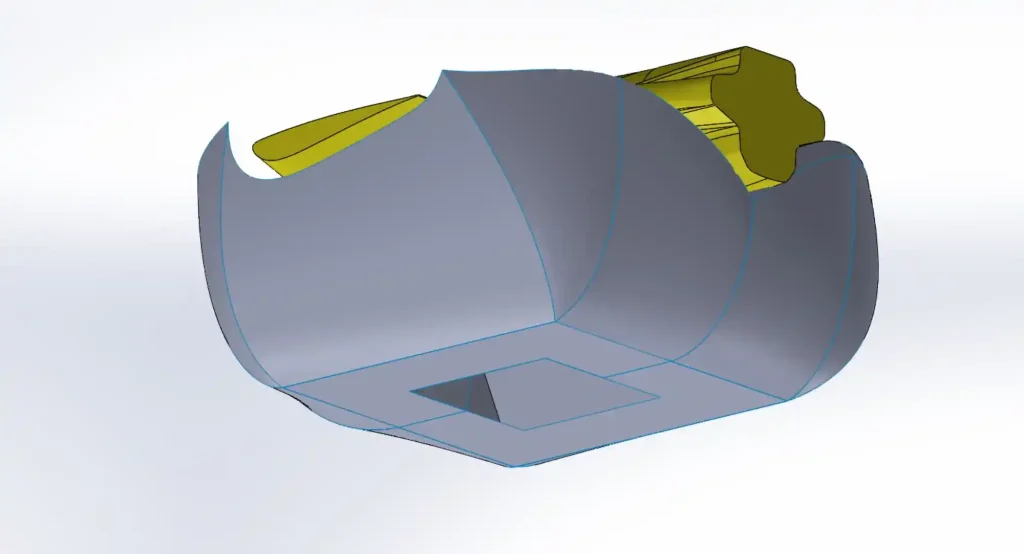
Tailored UAV airbags, cargo drop cushioning or recovery protection modules need four inputs: fuselage shape with the key impact zones, platform centre of mass, location, dimensions and volume of the airbag compartment, and the maximum allowable impact G-force or the required energy absorption.
- Platforms
- Fixed-wing UAVMulti-rotorVTOL recovery
- Environments
- Rough terrain
Technical data per manufacturer documentation from APCO Aviation Ltd , as of 2026-07-30.