
Inflatables & landing pads
Inflatable structures take their shape from internal pressure and internal support ribs — engineered properly, that yields light, compact parts.
A craft of its own
Designing and manufacturing inflatable structures is a specialised craft requiring advanced engineering expertise and precision workmanship. Unlike rigid structures, the shape emerges from the interaction of internal pressure and rib configuration. Controlling those parameters carefully yields lightweight, low-bulk, compact solutions for defence, aerospace and special-purpose applications.
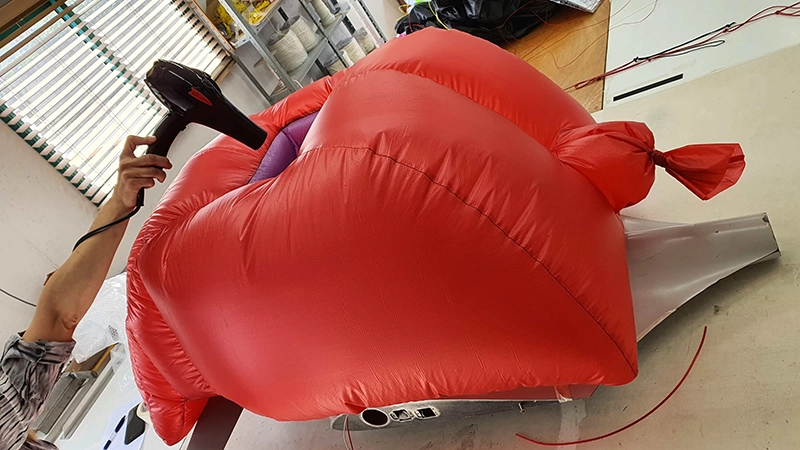
Typical applications
The range runs from aerodynamics to water landings:
- Inflatable fairings that reduce drag and improve stability.
- Stabilising shapes for high-descent-rate cargo and falling objects, enhancing safety and control during recovery.
- Airbags as impact protection for UAV, UGV and other platforms.
- Landing pads for UAVs: portable, durable, for safe unmanned aircraft recovery.
- Amphibious inflatables for waterborne operations.
- Custom inflatable solutions, engineered for mission-specific defence and security needs.
Manufacturing
Parts are built from military-grade materials with fully traceable components in ISO 9001-certified processes. They are built for rapid deployment, high reliability and optimal performance in harsh environments — for cargo drops, UAV recovery systems, guided aerial delivery and specialised defence operations.
- Platforms
- Multi-rotorFixed-wing UAVVTOL recovery
- Environments
- Amphibious recoveryRough terrain
Technical data per manufacturer documentation from APCO Aviation Ltd , as of 2026-07-30.