
Release mechanisms
Release mechanisms disconnect the parachute from the payload immediately after touchdown so wind cannot drag the platform across the ground.
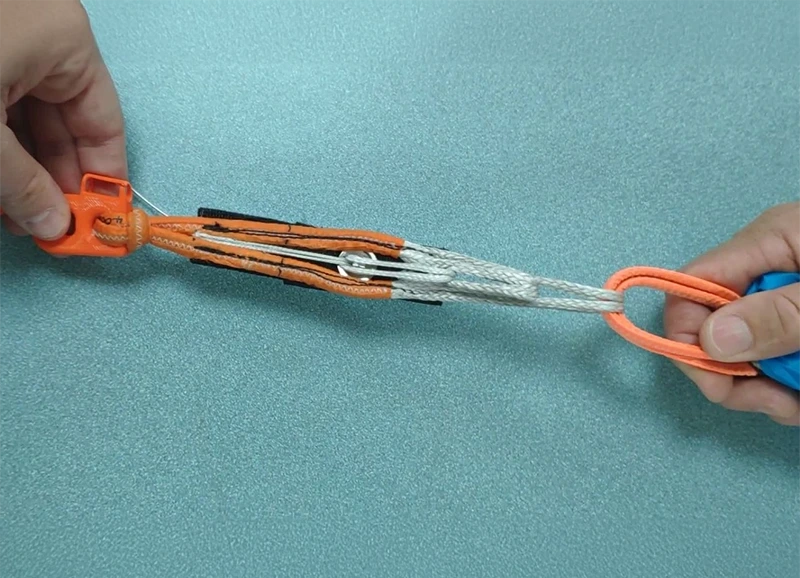
Why disconnection matters
After landing, a still-inflated canopy keeps generating force. Released at once it deflates quickly — protecting both platform and parachute. In UAV recovery, cargo drops and precision delivery this prevents damage to sensitive payloads and reduces the risk of canopy entanglement with vehicles, equipment or personnel.
In military, UAV recovery and cargo drop operations, release mechanisms are critical for safeguarding high-value equipment, minimising post-landing hazards and ensuring mission success.
Automatic or manual
Automatic systems act on load: they detect a threshold — typically during deployment — and disengage when load drops below a preset level, such as at ground contact. No operator action is needed, and the canopy deflates fast to prevent wind drag. On the other hand, accidental release is possible, weight is added, and rebound forces can reach the fuselage. Manual systems require an intentional electrical or mechanical action.
Common types
The choice follows payload size, mission profile, reuse frequency and operational constraints:
- 3-ring release: proven design in several configurations, including lightweight Dyneema loop versions for reduced mass.
- Cypres electromechanical cutters: widely used in the skydiving industry, highly reliable and field-tested.
- Jettison systems: actuated by servo motors, suited to remote or automated operation.
- Tow release: derived from paragliding tow-launch equipment, simple, reliable and light.
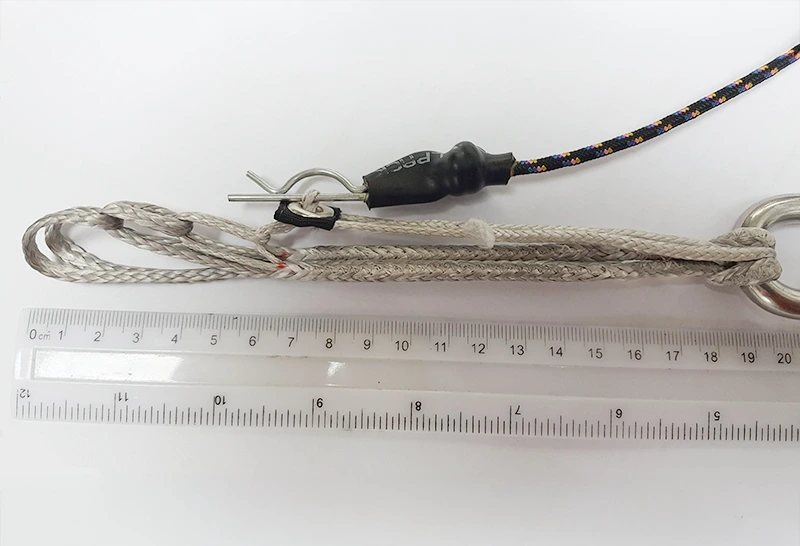
What an effective release mechanism delivers
In defence and security operations — from Joint Precision Airdrop Systems (JPADS) to UAV recovery — an effective release mechanism prevents damage to sensitive payloads, reduces the risk of canopy entanglement with vehicles, equipment or personnel, and improves post-landing recovery efficiency.
The manufacturer designs and builds lightweight, low-bulk and high-strength release mechanisms using military-grade materials, ensuring compatibility with a wide range of parachutes, including cargo parachutes, steerable ram-air canopies and custom textile solutions.
- Platforms
- JPADSFixed-wing UAVVTOL recovery
- Environments
- Rough terrainAmphibious recovery
Technical data per manufacturer documentation from APCO Aviation Ltd , as of 2026-07-30.