
Ultralight low-volume solutions
Weight and packed volume are finite on every platform. This family finds the reserves in material, geometry and hardware.
Where the technology comes from
The manufacturer leverages over 50 years of aerodynamic design expertise to deliver lightweight, low-bulk, low-volume textile solutions. The basis is its leadership in the paragliding industry, where the Hike & Fly movement has driven extreme weight savings for over a decade. Those proven aerospace technologies and materials are adapted to the demanding needs of the defence and security sectors and carry into parachutes, cargo drops, UAV recovery systems, inflatables and steerable ram-air special parachutes — engineered for mission-critical performance and a reduced logistics footprint, with MIL-SPEC compliance where required.
Where the weight goes
Not in one place, but across the whole assembly:
- Parachute cloth from 10 g/m² against the industry-standard 40 g/m² F111 nylon, reducing mass without compromising strength.
- Soft links in Dyneema fibre instead of steel quick links or rapide maillons, matching or exceeding their tensile strength while weighing a fraction as much.
- Self-inflating airbags without ducts, batteries or pyrotechnic modules.
- Geometry: optimised canopy design improves sink rate by up to 30 per cent, allowing smaller and lighter canopies. The steps: round → pull-down apex round → square → gliding chute.
- Hardware in 7075-T6 aviation-grade aluminium, lighter than steel yet built for extreme conditions.
- Dyneema 3-ring release: a simplified, manual-release system based on the proven skydiving standard, delivering substantial weight savings over mechanical alternatives.
Sizing instead of overdesign
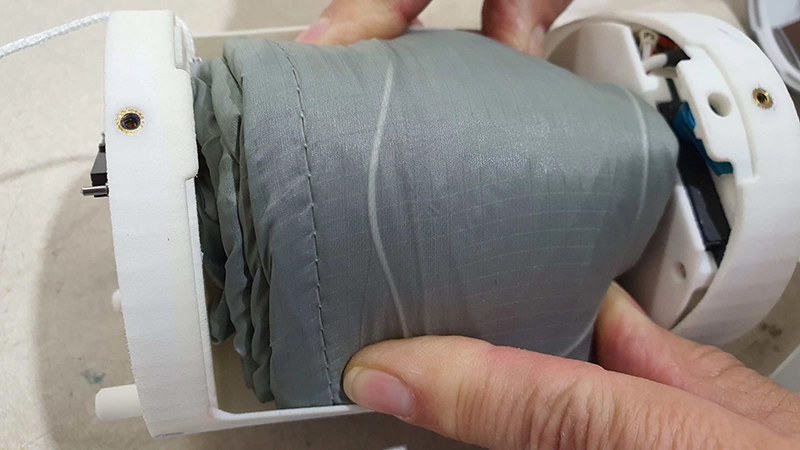
The biggest lever is load-optimised engineering: matching canopy strength precisely to the mission-specific opening shock removes overdesign and shrinks the system further. Compression deployment bags keep the packed parachute small without compromising a clean opening.
Whether for precision airdrop systems, UAV recovery or special operations equipment, ultralight parachute and textile solutions deliver maximum performance with minimum weight and bulk, giving operators a decisive logistical advantage.
- Platforms
- Fixed-wing UAVMulti-rotorH.A.L.O. platforms
- Configurations
- square, cruciform and round canopies
Technical data per manufacturer documentation from APCO Aviation Ltd , as of 2026-07-30.