
Human-rated certification
Where the application or the customer requires human-rated certification that authorities have not defined, the manufacturer runs qualification along EN standards.
What is certified
Where human-rated certification is required but not currently defined by the authorities, the manufacturer aligns certification with EN European Norm standards, ensuring the highest possible safety benchmarks for custom and specialised requirements.
The manufacturer develops and produces canopies, harnesses, airbags and parachutes to EN certification standards, ensuring safety, reliability and operational readiness for defence, aerospace and special mission applications. EN certification itself can only be obtained through an accredited certification laboratory, so the test programmes run through accredited external labs.
Test scope
Shock and load testing runs in two stages. First the shock test: the parachute is laid out across the track like a wall and connected by rope to an accelerating truck. As the slack is taken up, a sudden and massive shock load hits the canopy — a pre-defined weak link must break without damaging the parachute. Only upon successful completion of the shock test is the load test performed: the parachute is connected to a truck that accelerates along a runway, gradually increasing speed to achieve a dynamic load of up to 4,000 kg.
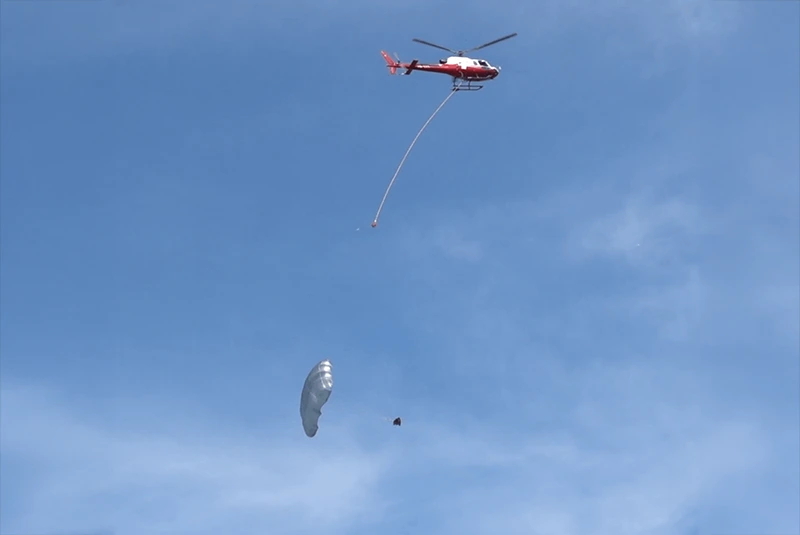
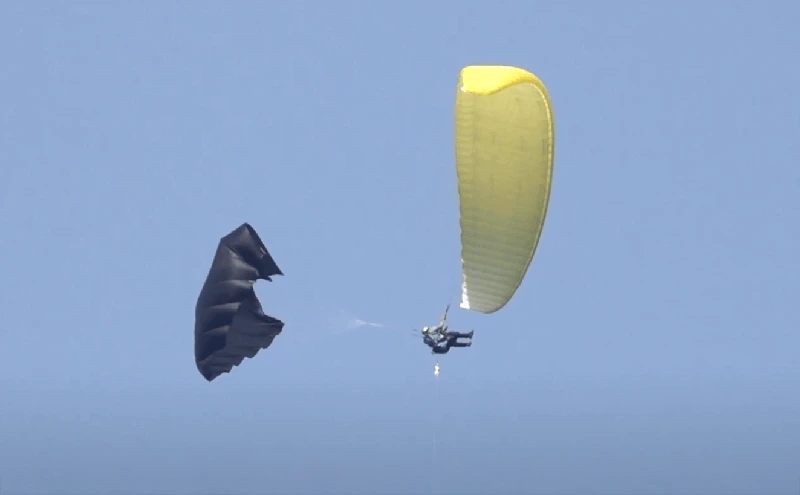
- In-flight deployment from helicopters to evaluate real-world aerodynamic performance and reliability.
- Helicopter drop testing: free-drop testing of payloads to validate opening forces, descent rates and deployment sequence reliability.
- Impact measurements with high-precision instrumentation to measure landing forces on various terrains, ensuring mission-ready performance.
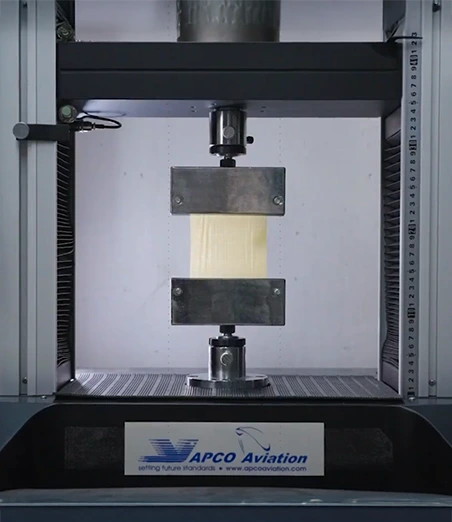
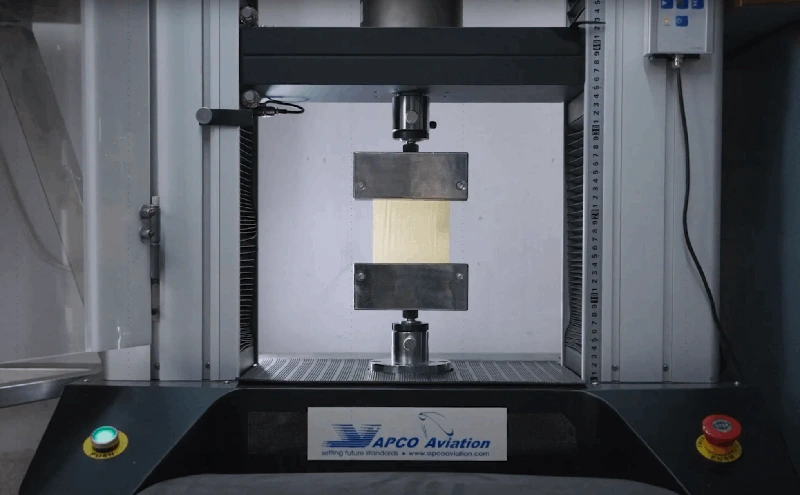
- Strength and durability testing: tensile and structural integrity testing of harnesses, airbags and load-bearing components to verify compliance with EN and applicable defence standards.
- Airbag performance evaluation: impact energy absorption, inflation speed and pressure retention, for UAV, manned aircraft and ground-based applications.
Beyond EN
The certification process ensures that every product meets not only EN standards but also defence-grade operational requirements. By combining over 50 years of aerodynamic expertise with state-of-the-art testing facilities, the manufacturer delivers certified solutions that are trusted in both civil and military operations worldwide.
Why certification matters
Certified equipment guarantees predictable, repeatable and safe performance, reducing operational risk and ensuring compliance with international procurement requirements. Whether for emergency systems, UAV recovery or mission-critical drops, certification ensures systems perform exactly as designed when it matters most.
The certification process also proves independent results of tests by an accredited, well-known, objective body, and can help obtain FAI approvals and proof of safety for human applications — especially valuable in the case of air taxis and new-generation VTOL human-carrying systems.
- Standards
- ISO / AS
- Platforms
- Paramotor · foot launchParatrikeH.A.L.O. platforms
Technical data per manufacturer documentation from APCO Aviation Ltd , as of 2026-07-30.