
Ram-air parachutes
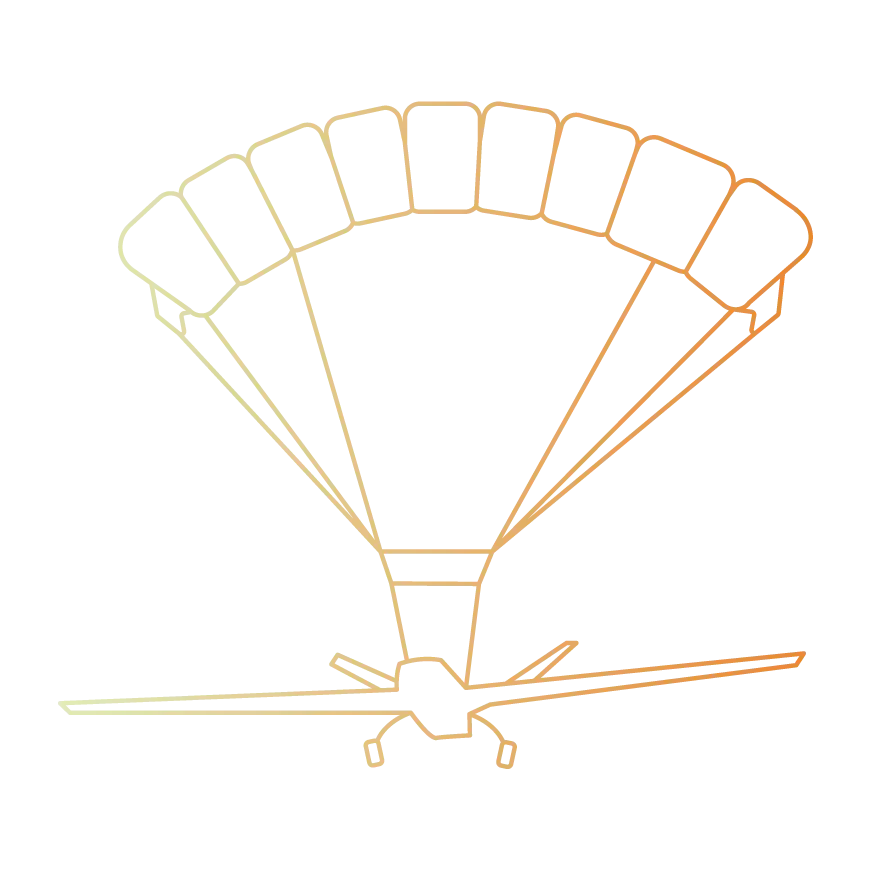
Ram-air parachutes carry a full aerodynamic profile with upper and lower surfaces and fly as a wing — with glide performance and control.
How they work
Both surfaces are inflated by ram air and form a wing-like structure. Also known as parafoils, ram-air parachutes were first developed in the skydiving industry, evolved there into high-performance platforms and shaped the design of record-breaking paragliders. In military applications, ram-air systems are the preferred choice where high glide ratio, precision navigation and steerable flight control are required.
Precision delivery from stand-off range
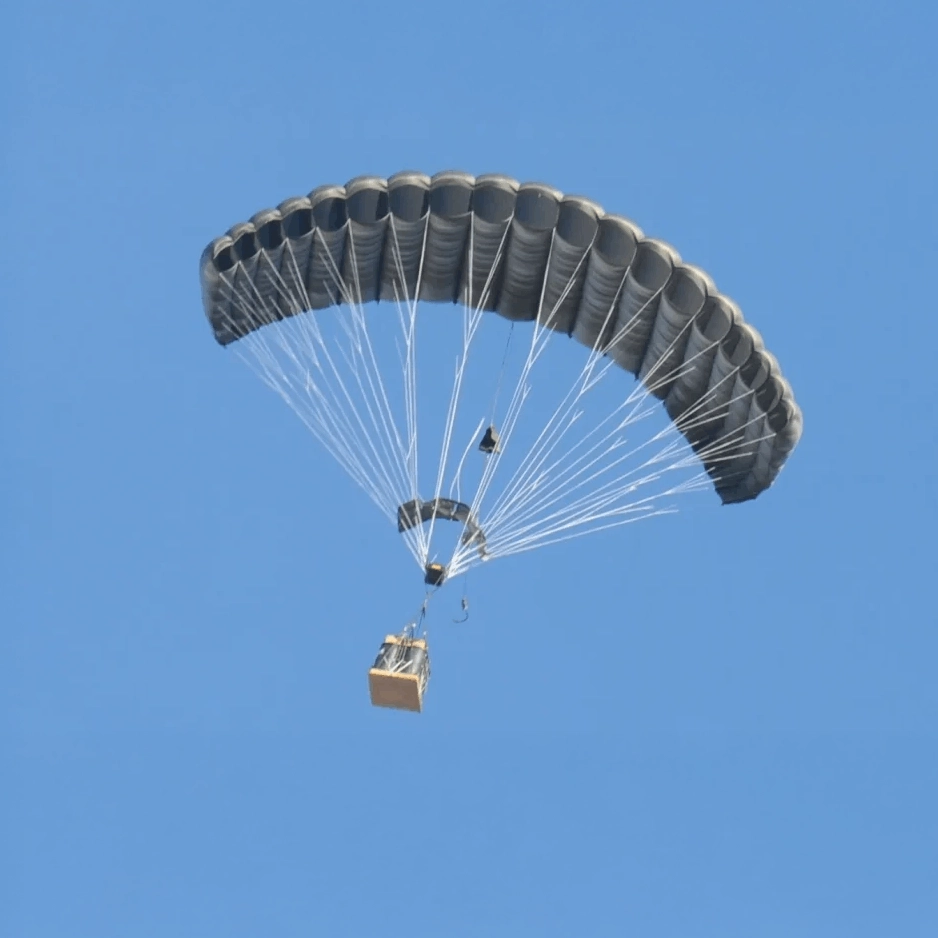
With a glide ratio of up to 1:10 they cover long distances toward the target while maintaining full manoeuvrability, directional control and flare capability for smooth landings. In Joint Precision Airdrop Systems (JPADS) and Guided Precision Aerial Delivery Systems (GPADS) they allow deployment from high altitude and far from the target landing zone — the aircraft stays outside high-threat areas while still delivering cargo, equipment or personnel with pinpoint accuracy.
Their steerable nature also makes them suitable for tactical supply drops, UAV recovery operations and other special missions where precision is critical.
Opening at high speed
For high-speed deployment a slider controls and prolongs canopy inflation. That reduces the risk of damage during opening but costs more altitude than other parachute types. Opening altitude therefore has to be part of mission planning from the start.
- Platforms
- JPADSH.A.H.O. platformsH.A.L.O. platformsParamotor · foot launch
- Environments
- Low air densityRough terrain
Technical data per manufacturer documentation from APCO Aviation Ltd , as of 2026-07-30.