
Weight and packed volume
Where every gram counts, performance comes from better geometry and lighter components, not from more material.
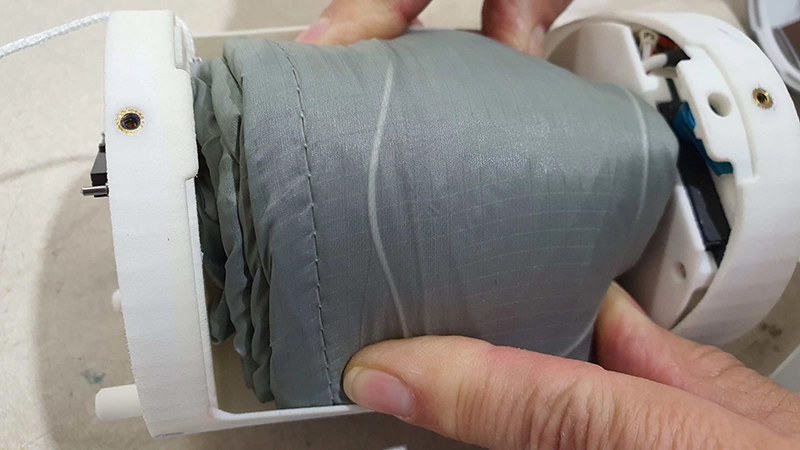
Ultra-lightweight and low-bulk
APCO Aviation Defense designs and manufactures ultra-lightweight parachute recovery systems that deliver maximum performance with minimum bulk. The products are tailored for military UAVs and airborne platforms where every gram counts. With more than 50 years of experience in aerodynamic design, APCO draws on a legacy of innovation in paragliding to bring high-efficiency textile engineering into the defense sector.
The fabric classes
Specialised fabrics and components reduce weight without compromising strength. Four classes cover the range: Dyneema laminates as light as 10 g/m², ultra-fine 10 Denier woven Nylon 6.6 at 20 g/m², the industry-standard F-111 at 40 g/m², and woven Dyneema HMPE parachute fabrics for the highest demands. Selection follows the application, not the lowest number.
Origin: hike-and-fly
APCO pioneered lightweight technology in the paragliding world, where a complete flight system has to be carried on foot and flown across long distances. That same thinking now drives compact recovery systems for military and commercial UAVs.
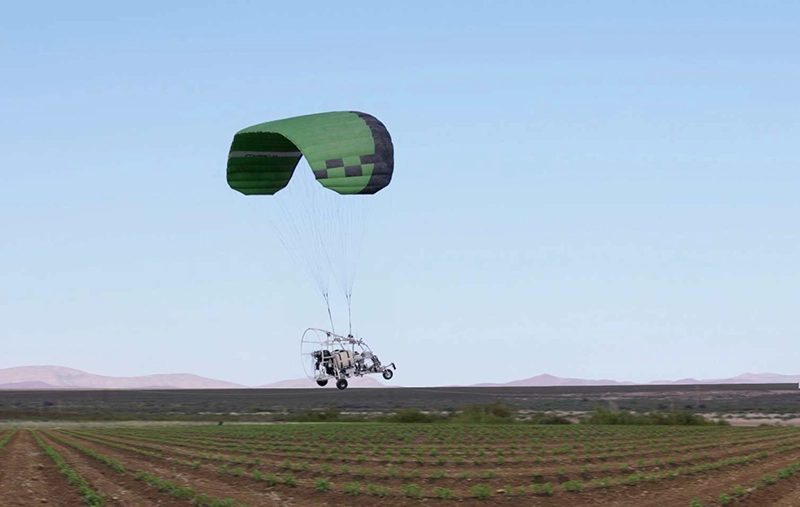
The lever is geometry
Smart canopy architecture and weight-optimised rigging can reduce sink rates by up to 30 per cent. That allows downsizing and cutting weight while maintaining recovery reliability — even in tight packaging spaces. Lightweight components add to it:
- Soft links in Dyneema fibre replace metal parts.
- Self-inflating airbags remove the need for extra power systems.
- Aluminium 7075-T6 hardware provides strength without weight.
- Compression packing minimises stowage volume.
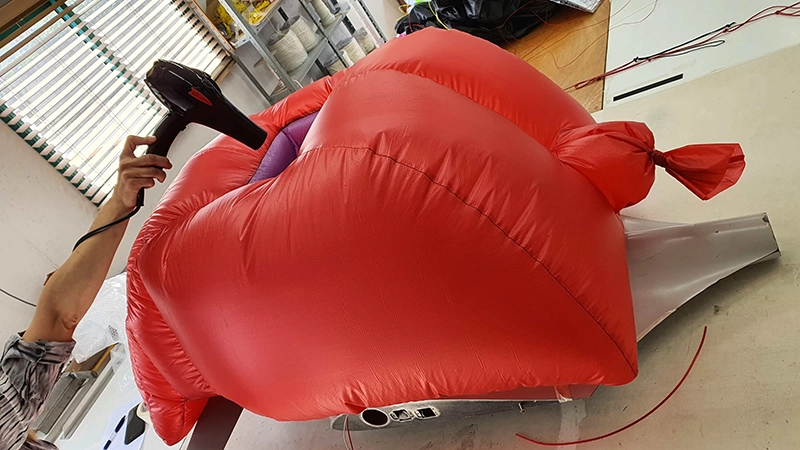
Engineered for harsh conditions
All APCO Aviation Defense systems meet or exceed military standards. They are field-proven under harsh conditions: high-speed, high-altitude and high-G environments. Every solution is tested, validated and qualified under real-world conditions.
Backed by field success
The lightweight recovery systems are proven in practice:
- Operates in active IDF reconnaissance platforms.
- Built in an ISO 9001 and MIL-SPEC certified facility.
- Fully compliant with the Wassenaar Arrangement for export.
- Tested up to 1,000 kg payloads in the in-house lab.
- Used by top defense players such as IAI, Rafael, Elbit and U-Vision.
From micro drones to heavy UAVs
From micro drones to heavy UAVs, the result is mission-ready recovery systems that combine cutting-edge materials with world-class performance. Lightweight is no longer a compromise – it is a tactical advantage.
- Applies to
- Ultralight low volume solutionsRam-air parachutesUAV airbags
- Materials
- DyneemaNylon 6.6
Technical data per manufacturer documentation from APCO Aviation Ltd , as of 2026-09-22.