
Creating a prototype
A concept cannot be evaluated while it remains a drawing. The prototype turns the agreed technical direction into something reviewable.
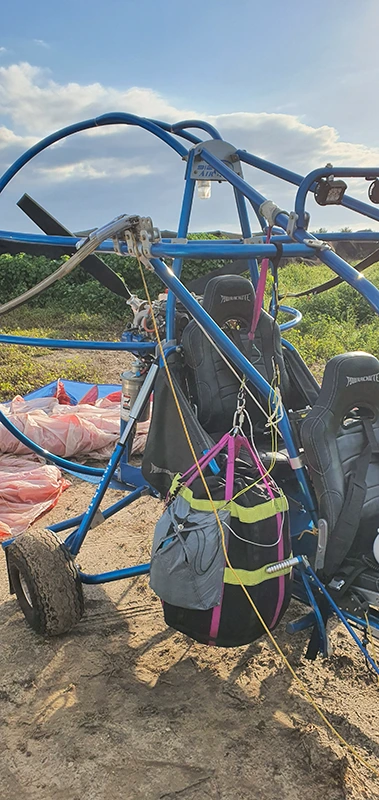
Connect the idea to the function
Creating a prototype turns agreed technical requirements into a physical solution that can be reviewed, integrated, tested and refined before production. Each prototype is developed around the platform, the required recovery or protection function and the operational conditions in which the final solution must perform.
The prototype starts from the agreed requirements and the outcome the solution must support: controlled descent, impact protection, flotation, payload protection, opening-shock control, capture, deceleration or another recovery or protection function. What the prototype must demonstrate — and which technical questions it must help answer — is defined up front.
Design around the platform
The prototype is developed around the physical platform rather than treated as a textile element added later. This helps reduce integration friction and keeps the textile solution connected to the mission outcome it was created to support. The design considers:
- Platform weight, dimensions and geometry.
- Available space and packing volume.
- Payload sensitivity.
- Attachment points and interfaces.
- Required loads and load distribution.
- Deployment and operating conditions.
Materials and construction
The right prototype depends on more than choosing a fabric: materials and construction methods must support the function the system is meant to perform. It shows how materials, construction, interfaces and deployment requirements work together — before the solution moves into testing and validation.
Materials and construction methods must support the required strength, flexibility, packing volume, deployment behaviour and environmental conditions. The prototype may include textile fabrics, webbing, lines, weldable materials, inflation elements, deployment bags, containers and mechanical hardware. Each element is selected according to the platform, the intended function and the conditions in which the solution must operate.
Build, review and refine
The agreed direction becomes a physical prototype that can be reviewed against the platform and technical requirements. Reviewing the physical solution helps identify changes before testing: adjustments may be made to the geometry, materials, packing method, attachment points, construction or interfaces. Working through the prototype together supports informed technical decisions before testing or production.
Both teams can examine:
- Configuration and dimensions.
- Materials and textile construction.
- Platform interfaces and attachment points.
- Packing, folding and deployment direction.
- Practical integration.
- Access for inspection, servicing or reuse.
Preparing the prototype for testing
Once the physical direction has been reviewed and refined, the prototype can move into testing and validation. Testing may evaluate deployment, descent, loads, inflation, flotation, impact protection, air retention, retrieval or another required performance area.
The prototype does not replace validation. It creates the physical solution that validation can test.
What your team receives
Your team receives a physical prototype that connects the agreed requirements to a defined recovery or protection textile solution. This includes:
- A defined prototype configuration.
- Selected materials and construction methods.
- Platform interface and attachment information.
- Packing, folding or deployment direction where applicable.
- A basis for integration review, testing and validation.
- Identification of areas requiring further development.
- Clearer technical decisions before production.
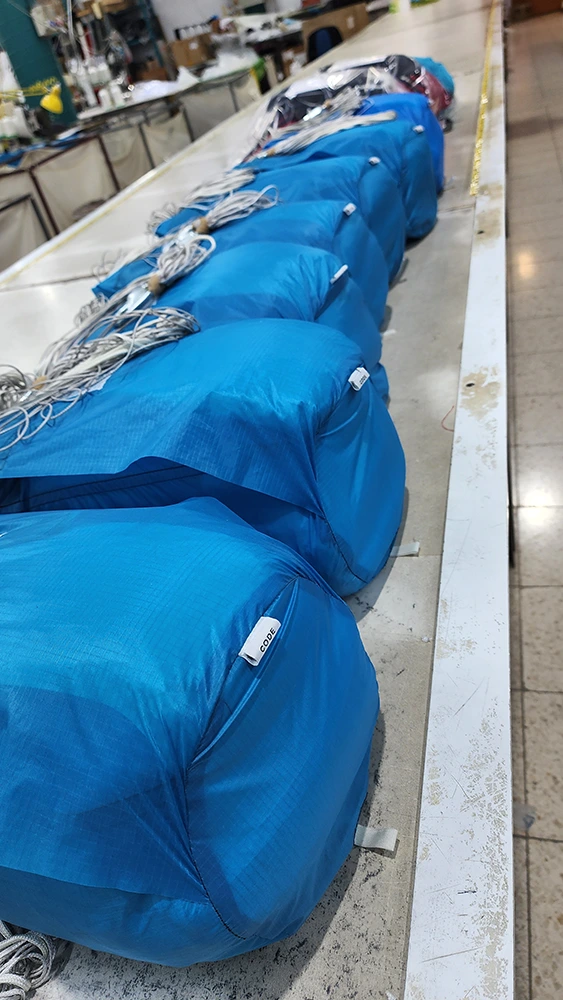
Why APCO
A textile prototype can look simple from the outside. Making it fit the platform, carry the required loads, deploy correctly and perform the intended recovery or protection function takes a great deal of knowledge.
The manufacturer’s team brings experience in UAV recovery, parachutes, airbags, flotation, aerodynamics and textile engineering. Because the manufacturer works across development, testing and production, the prototype is created with the next project stages in mind: materials, construction, integration, testing and future manufacturing remain parts of the same physical solution. A 3,200 m² production facility supports the connection between prototype development, manufacturing and quality control.
- Phase
- Prototyping
- Continues with
- Testing
Technical data per manufacturer documentation from APCO Aviation Ltd , as of 2026-07-30.