
Maintenance, repair and upgrades
Delivery does not end the responsibility: maintenance, repair and upgrades keep the system serviceable and adapt it to changed requirements.
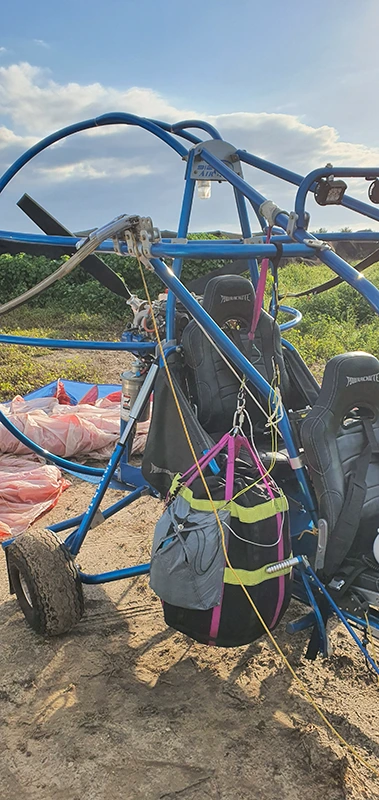
Assess first, then decide
Maintenance, repair and upgrades help keep the system serviceable, extend its operational life and adapt it when wear, damage or new requirements affect its ability to perform.
Whether a system can stay in service follows from its physical condition, original function and current operating environment. Depending on scope the assessment covers textile condition and wear, seams, attachment points, mechanical connections, platform interfaces, folding and storage, deployment elements, handling and transport effects, current payload and platform requirements, integration changes and the available technical documentation.
Three possible directions
The system is always reviewed against the function it must continue to perform — such as controlled recovery, impact protection, flotation, containment, capture, deceleration, deployment or another textile-based protection requirement. This helps determine whether the system can remain in service or requires technical action:
- Maintenance: handling, storage, packing or configuration needs that keep the system suitable for continued use.
- Repair: where wear or damage affects textile components, construction areas, connections or other elements of the physical system.
- Upgrade: where platform, payload, deployment arrangement, integration limits or mission requirements have changed.
When a change affects the configuration
When a modification affects the system’s configuration or protective function, further prototype development, testing or validation may be required before the updated solution returns to use.
What your team receives
Your team receives a technical basis for deciding how to move forward with the existing textile solution: whether the system can remain in service, requires corrective action or should move into a new development direction. Depending on the assessment, this can include:
- Findings related to the system’s condition and suitability.
- Identification of elements requiring attention.
- A recommended maintenance, repair or upgrade direction.
- Identification of further inspection requirements.
- Assessment of configuration or operating changes.
- Identification of testing or validation needs.
- Supporting documentation where included in the project scope.
Why APCO
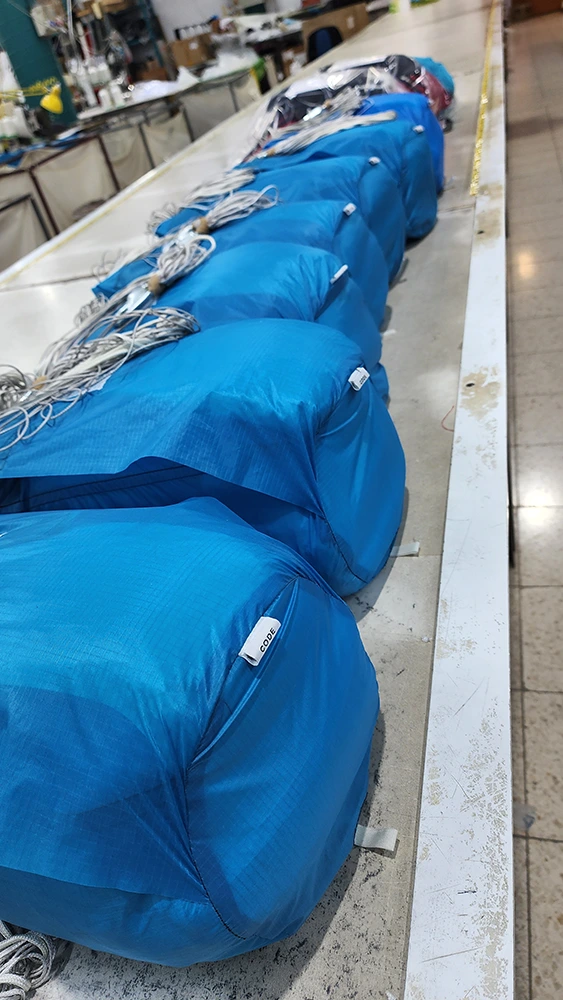
Understanding what an existing textile solution needs requires knowledge of more than visible condition: experience with materials, construction, deployment, loads, integration and the protective purpose of the complete system.
The manufacturer develops defense textile solutions for recovery and protection across defense, aerospace and unmanned systems, including UAV recovery systems, parachutes, airbags, deceleration mechanisms, deployment systems, ballistic and capture nets and custom textile-based applications. Its 3,200 m² production facility supports in-house textile manufacturing, inspection, quality control and technical service activity. This keeps maintenance, repair and upgrade decisions grounded in how the system was built and how it must continue to perform.
- Phase
- After sale
- Continues with
- Testing
Technical data per manufacturer documentation from APCO Aviation Ltd , as of 2026-09-22.