
Support and lifecycle services
Technical involvement continues after delivery — for readiness, protection of critical assets and mission continuity.
When support is needed
A delivered system may raise new technical needs after it has been stored, handled, deployed or reviewed. Typical triggers:
- Your team needs guidance connected to the supplied system.
- Configuration or technical information requires clarification.
- Storage, handling or deployment raises a technical need.
- Platform, integration or mission conditions have changed.
- Further testing or validation may be required.
- The system may require maintenance, repair or an upgrade.
- The original solution no longer addresses the current requirement.
Matching the need to the right action
Not every post-delivery need requires the same response. First comes understanding what has changed and how it relates to the supplied system. The review considers the delivered system and its configuration, its intended function, available project documentation, current operating and integration conditions, changes to platform, payload or mission, the physical condition — and whether further evaluation is required.
Technical support helps define the appropriate direction. When the need relates to wear, damage, modification or continued serviceability, the physical system may move into a maintenance, repair or upgrade assessment. The support available is defined around the supplied system and the agreed project scope. Depending on the need, the next action may include:
- Technical clarification.
- Review of supplied documentation.
- Further testing or validation.
- Maintenance or repair assessment.
- Review of a possible upgrade.
- Reassessment of changed requirements.
- Development of a new prototype.
- Replacement or production planning.
What your team receives
Your team receives a clearer technical direction for moving forward with the delivered system. The goal is to help your team make responsible technical decisions while keeping readiness, protection and Critical Asset Preservation at the centre of the discussion. Depending on the need, this can include:
- Clarification of the technical requirement.
- Review of relevant supplied-system information.
- Identification of the appropriate next technical stage.
- Direction toward further testing or validation.
- Direction toward maintenance, repair or upgrade assessment.
- Identification of changed requirements.
- Identification of whether new development is needed.
- Greater continuity between the delivered system and its intended function.
Why APCO
Technical support after delivery requires more than answering a question. It requires understanding the physical solution, the materials, the forces acting on the system and the recovery or protection function it was designed to perform.
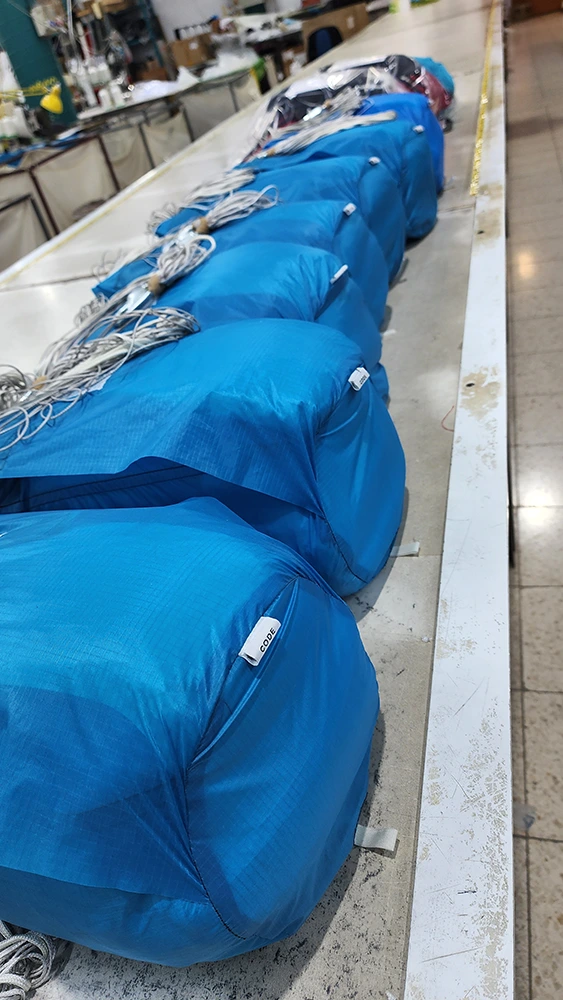
The manufacturer develops defense textile solutions for recovery and protection across defense, aerospace and unmanned systems. Its team brings experience in UAV recovery, parachutes, airbags, flotation, deceleration, deployment systems, textile engineering and production. Because it works across requirements, prototype development, testing, production and quality control, technical needs after delivery remain connected to the wider history and approved configuration of the system. A 3,200 m² production facility supports the connection between manufacturing activity, quality control, technical records and physical service requirements.
- Phase
- After sale
- Continues with
- TestingProduction
Technical data per manufacturer documentation from APCO Aviation Ltd , as of 2026-07-30.