
Fixed-wing UAV
Fixed-wing platforms deploy in flight with no hover phase — here recovery often replaces the landing gear.
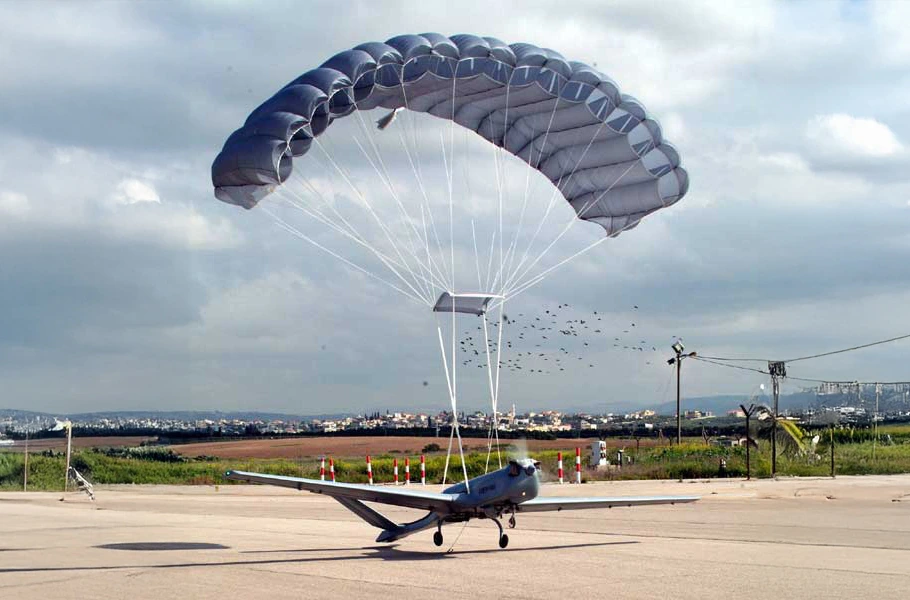
Two operational cases
This covers fixed-wing UAVs and manned aircraft that deploy parachutes in flight — without the VTOL hover requirement. They depend on advanced recovery systems for safe and reliable landings.
The first case is the standard landing procedure: some UAVs drop the landing gear entirely, launch from a catapult and land under a parachute. The second is emergency deployment, which has to work at any airspeed up to terminal velocity. What matters then is structural integrity of the airframe and attachment points, tolerance for high G-loads during deployment, and consistent inflation even from spins or unusual attitudes.
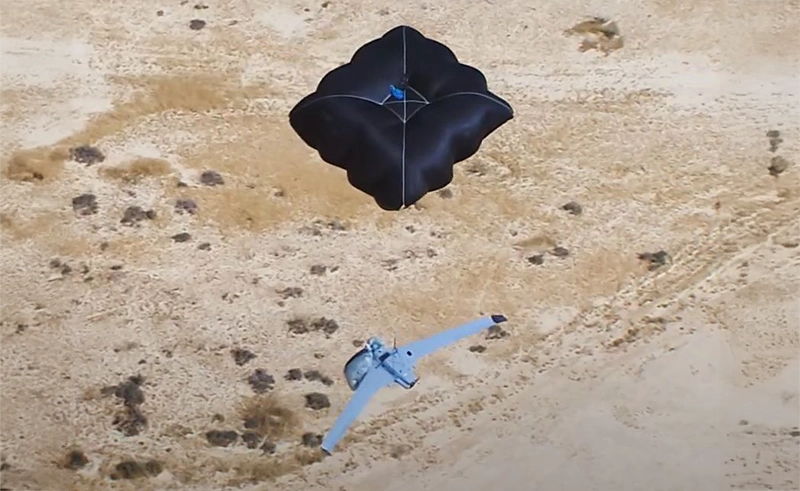
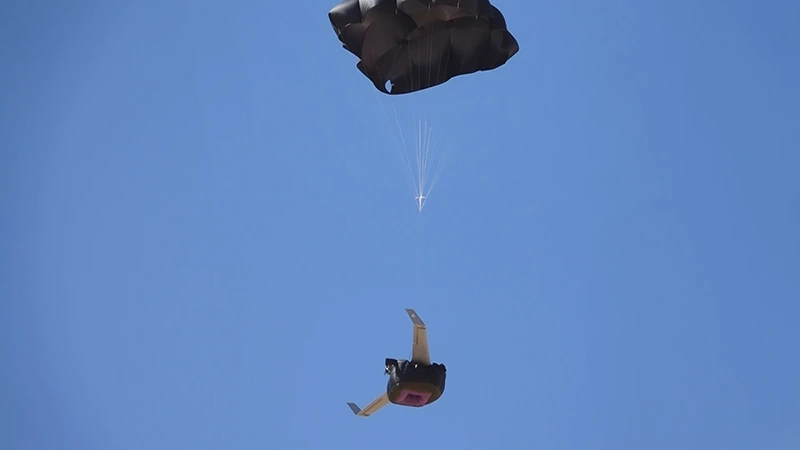
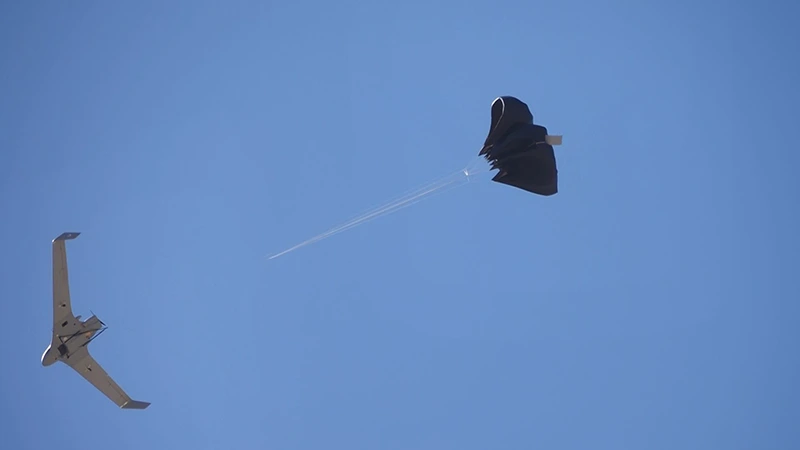
Integration belongs in the design phase
The internal bay needs size, location and integration — and therefore early coordination in the UAV design phase. Doors and release systems must open cleanly and consistently; they may serve as drogue chutes or link directly to the main canopy. Parachute size and deployment sequence can be optimised for varying payload weights and mission profiles.
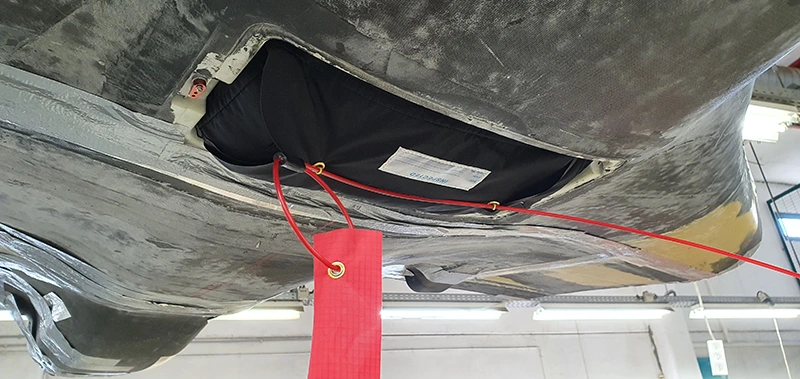
Operating across the service life
Materials and construction must withstand UV exposure, extreme temperatures and moisture so the system stays ready in all climates. Recovery can be linked to onboard sensors and autopilot control so the emergency decision is automated. An accessible bay and modular components keep turnaround between missions short.
Systems can be engineered to meet military standards, EN certification and other aviation regulatory requirements for defence and commercial applications.
Light, compact, compliant
Fixed-wing parachute recovery systems are engineered for lightweight performance, low bulk and compliance with stringent defence and aerospace standards. The focus is on custom-made textile solutions for both standard and emergency UAV recovery applications.
- Products
- Deceleration parachutesUAV airbagsRelease mechanismsUltralight low volume solutions
- Environments
- Rough terrainAmphibious recovery
Technical data per manufacturer documentation from APCO Aviation Ltd , as of 2026-07-30.