
Helicopter & UAV engineering
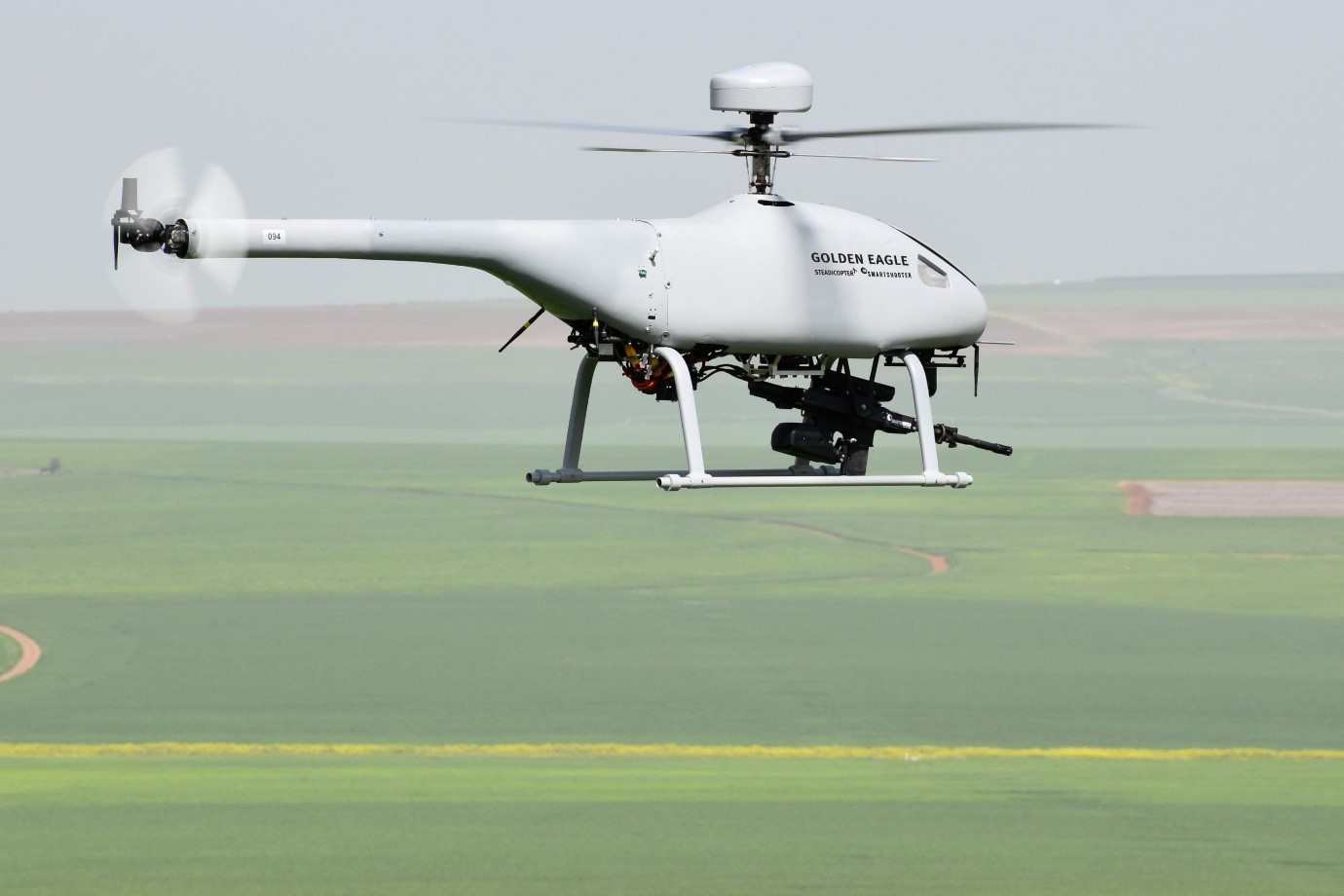
An unmanned helicopter is a VTOL special case: the rotor is literally in the way of deployment.
What sets rotorcraft apart
Helicopter UAVs are a sub-category of VTOL aircraft but have unique aerodynamic and mechanical characteristics that directly affect parachute system design:
- Large rotating disc: the main rotor is a significant obstacle during deployment — placement, firing trajectory and rotor strike prevention drive the design.
- Autorotation capability: unlike multi-rotor UAVs, helicopters can descend without power using autorotation, but this is not always possible on unmanned platforms (limited control authority, failure modes).
- Single or dual rotor configurations: tail rotor or coaxial systems affect airflow, possible parachute locations and recovery dynamics.
- Higher kinetic energy per mass: helicopters generally carry heavier payloads at higher cruise speeds than multi-rotors, requiring more robust parachutes and deceleration strategies.
- Narrow fuselage: typically less internal space for parachute storage compared to multi-rotors or tilt-rotors.
The critical points
Four risks shape the design:
- Rotor strike: the canopy must deploy clear of the rotor arc, so pyrotechnic or spring-deployed canisters often fire sideways or upward.
- Rotor downwash: extremely strong in hover, so the deployment sequence must clear the turbulent air before inflation.
- Deployment in forward flight: different airflow patterns than tilt-rotors, so the canopy must be stabilised during extraction to prevent entanglement.
- Tail boom and tail rotor: the deployment path must avoid snagging on boom, tail rotor or vertical stabilisers.
Making the decision in advance
Part of the engineering work is defining the altitude envelope where autorotation is viable — and where parachute deployment is faster and safer. That boundary belongs in the system design, not in the operational decision.
Best practice: system design
These principles have proven themselves in developing helicopter UAV parachute systems:
- Parachute placement: favour top-aft or side-mounted launch tubes angled to avoid rotors and tail.
- Rapid ejection: use pyrotechnic or gas-powered systems to ensure the canopy clears rotor downwash.
- Canopy type: consider round, cruciform or small ram-air designs based on sink rate requirements; round is most common for pure vertical arrest.
- Reefing and deployment control: reefing lines or deployment sleeves manage inflation shock and prevent canopy damage.
Best practice: triggering and decision logic
When to deploy is decided by the logic on board:
- Automated triggering: integrate with the flight controller to detect loss of lift, excessive roll or pitch, or unrecoverable control loss.
- Manual override: always include a remote manual deployment command.
- Envelope protection: different trigger parameters for hover and forward flight, to avoid deploying too early in recoverable conditions.
Best practice: testing protocol
Four test types underwrite the design:
- Ground ejection tests: verify the parachute clears the rotor arc in multiple yaw orientations.
- Hover deployment tests: assess canopy inflation in worst-case downwash.
- Forward flight tests: validate stability in translational airflow.
- Autorotation transition scenarios: compare parachute effectiveness to autorotation performance.
Best practice: safety and compliance
Three points belong in every design:
- Rotor blade clearance margin: the minimum safe separation distance for the canopy trajectory is established via high-speed video and CFD simulation.
- Regulatory compliance: align with ASTM F3322 (for UAV parachutes) and any local CAA requirements.
- Fail-safe mechanisms: include a self-cutting riser release if the canopy drags the UAV after touchdown.
Engineering tips
From integration practice:
- Use streamers or pilot chutes for canopy stabilisation before full inflation in forward flight.
- For coaxial helicopters, downwash is more concentrated but symmetrical — the parachute may be mounted above centre for easier clearance.
- Design canopy deployment speed to overcome both downwash and forward flight slipstream simultaneously.
- Include post-deployment load dissipation features such as riser elastic inserts or load spreaders to prevent fuselage damage.
- Products
- VTOL recovery parachutesRelease mechanismsDeceleration parachutes
- Environments
- Rough terrainFire and heat resistance
Technical data per manufacturer documentation from APCO Aviation Ltd , as of 2026-07-30.