
High-velocity deceleration
Decelerating a very fast-moving object requires carefully engineered multi-stage solutions that withstand extreme aerodynamic forces.
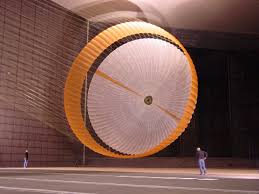
Several stages, several means
Whether in defence, aerospace or UAV recovery, high-velocity recovery systems often combine several steps:
- Parachute systems with staged deployment using opening sleeves, sliders, reefing devices or staged canopies.
- Textile drag devices such as deceleration rings, drag cones and drag plates, designed purely to create drag without functioning as a full parachute.
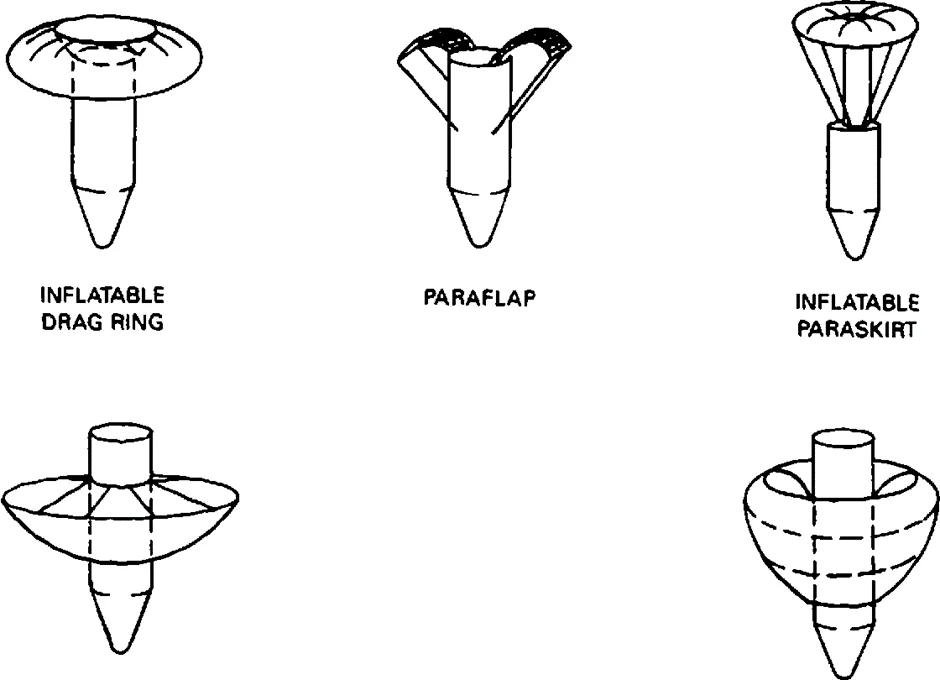
- Inflatable aerodynamic decelerators — e.g. ballute (attached inflatable decelerator), inflatable drag ring, paraflap, inflatable paraskirt or inflatable ring decelerator. They offer a high strength-to-weight ratio and can function in subsonic, transonic and supersonic regimes.
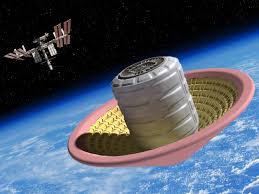
Common inflatable designs
Inflatable decelerators come in several basic forms:
- Inflatable drag ring: a circular ring that inflates to create uniform drag with minimal oscillation.
- Paraflap: textile panels that deploy outward to increase drag and stability.
- Inflatable paraskirt: an inflatable skirt structure that increases frontal area for enhanced deceleration.
- Hybrid inflatable-cone devices: designs combining conical drag surfaces with inflatable rings for stability.
Friction is the enemy
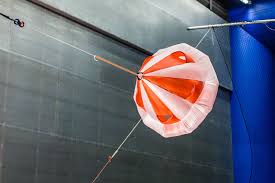
The critical design factor is eliminating friction between connected parts during deployment. At extreme speeds, heat and friction cut through even the strongest materials — much like a hot knife through butter. Low-friction fabrics such as PTFE (Teflon)-coated textiles are used, and relative movement between elements is minimised by design to prevent abrasion.
Damage analysis is part of it
When lines, bridles or risers break, the cause must be identified unambiguously: tensile overload or friction-induced melting. Metal hardware must be free from burrs, debris and sharp edges. CNC-machined items often require polishing to meet that standard; extruded metal components are generally preferable for high-velocity applications.
- Products
- Deceleration parachutesInflatables & landing pads
- Environments
- Supersonic recoveryFire and heat resistance
Technical data per manufacturer documentation from APCO Aviation Ltd , as of 2026-07-30.