
Paratrike
For paratrikes the engineering covers both: the main canopy of the trike and the emergency parachute system for crew, payload and equipment.
Two design philosophies
The paratrike solutions serve both manned and unmanned platforms, leveraging decades of sports aviation expertise from Apco Aviation.
The American style is steered with the legs, is typically heavier and carries larger, more powerful engines (commonly ROTAX 912 and above); its wide parachute connection geometry improves roll and yaw stability. The European style is steered with the hands and generally carries higher-performance wings that require smaller, lighter engines.
Unmanned changes the priorities
For unmanned applications, steering control type matters less than payload capacity and performance requirements. Reflex profile technology delivers a much higher level of stability and safety in the air, plus an increased speed range that a conventional parafoil or powered parachute cannot reach. High-performance reflex wings are more efficient and faster but more demanding to launch and control; simpler canopies are easier to operate with more modest performance.
Attachment points follow the platform
Paratrike systems can be engineered with wide or narrow attachment point configurations to match the geometry of the specific UAV.
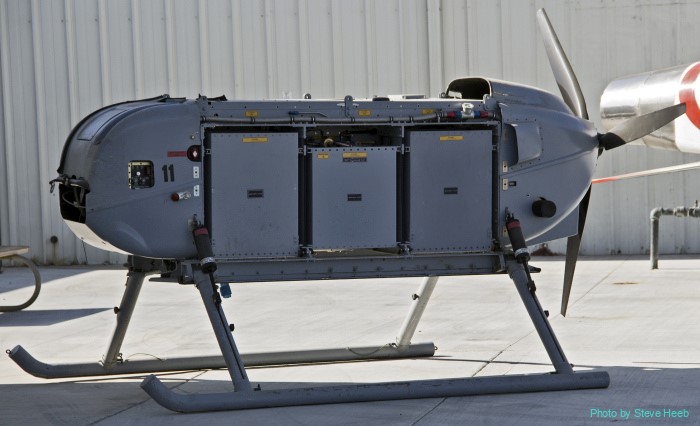
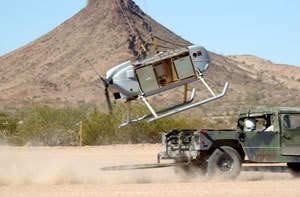
A notable example is the SnowGoose – Unmanned Logistics Aerial Vehicle (ULAV), a field-proven paratrike-based platform for cargo and resupply missions in remote or hostile areas. It operates autonomously or semi-autonomously and can launch by rolling take-off from a moving vehicle or track system — with no prepared runway. This supports logistics operations from almost any location, including rugged and improvised sites.
- Products
- Ram-air parachutesHuman-rated certificationRelease mechanisms
- Environments
- Rough terrain
Technical data per manufacturer documentation from APCO Aviation Ltd , as of 2026-07-30.