
Super light UAV parachute
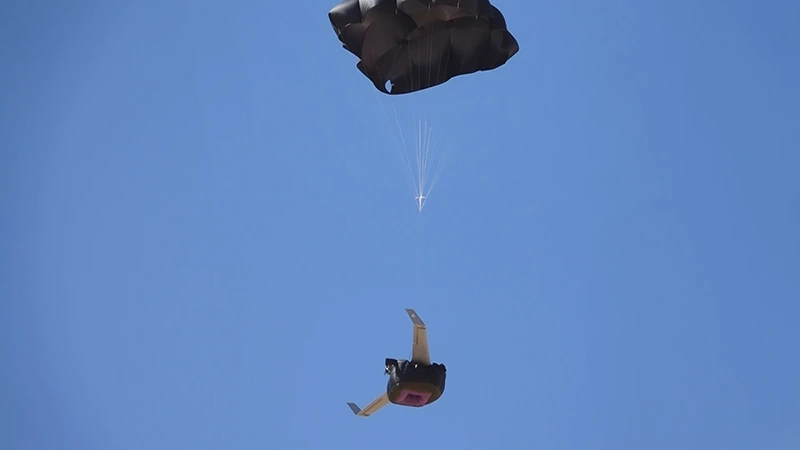
A UAV parachute under 800 g for payloads up to 75 kg with a sink rate below 4 m/s – combat proven with thousands of successful deployments and zero failures.
The challenge
Designing a UAV parachute system with an ultra-lightweight profile while maintaining safe descent characteristics posed a unique engineering challenge. The requirement was clear:
Meeting these requirements demanded materials and methods far beyond conventional UAV recovery solutions.
- Total parachute weight under 800 g
- Payload capacity up to 75 kg
- Sink rate below 4 m/s
Ultra-lightweight materials
APCO employed a proprietary high-tenacity nylon 6-6 fabric weighing only 20 g/m² – a breakthrough in balancing strength and low bulk. Combined with advanced reinforcement techniques, this material enabled record-breaking weight reduction without compromising durability.
Advanced design and construction
The final configuration resulted in a 35 m² cruciform/rectangular parachute with a drag coefficient above 2.5. This design provides unmatched aerodynamic efficiency, ensuring a safe and stable descent profile even at maximum payload capacity.
Deployment innovation
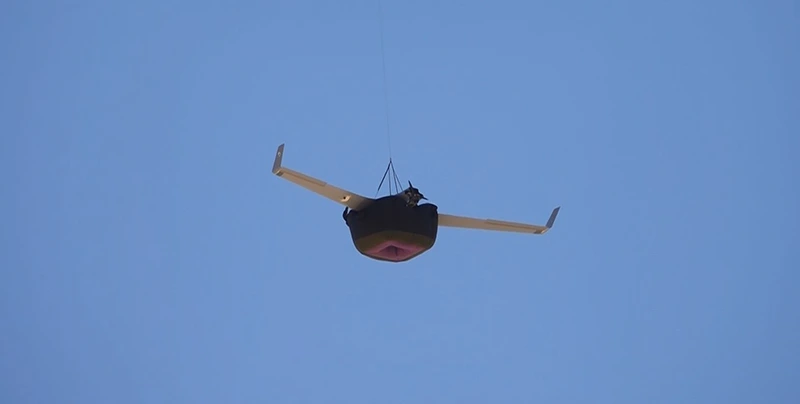
To ensure reliability, APCO developed a cross-slider system that reduces opening shock. Flight tests confirmed 2–3.5 g opening loads at 30 m/s, well within acceptable safety margins.
Custom deployment bag and tooling
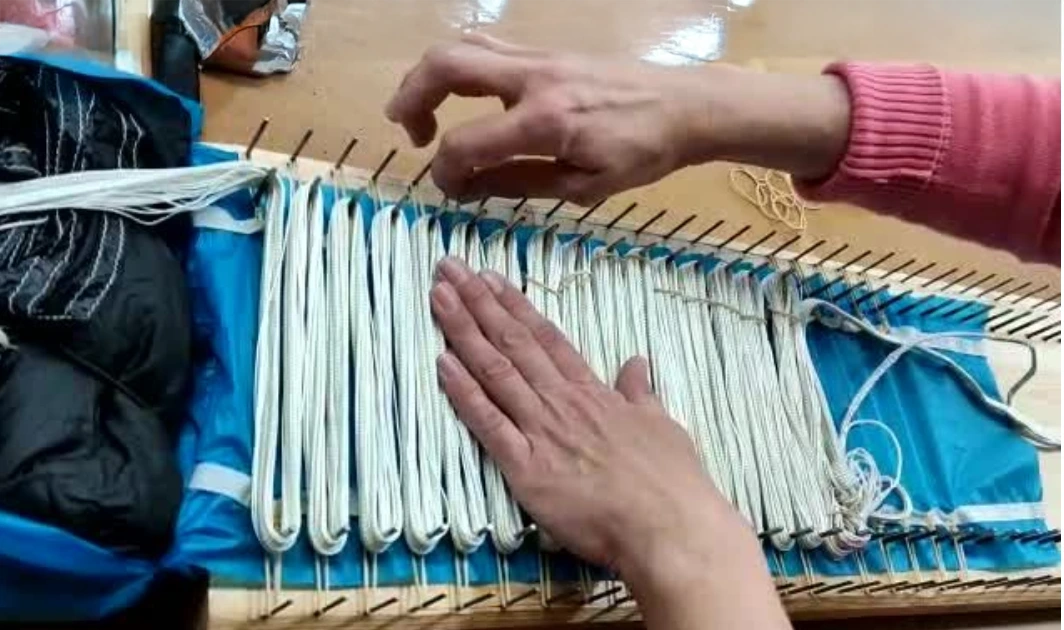
A custom-made deployment bag was engineered together with specifically designed tooling to aid in the packing sequence. This makes repacking faster, more consistent and more reliable for the end user, ensuring consistent deployment every time.
Results
- Unprecedented performance ratio: best-in-class sink rate per kilogram of payload and sink rate per gram of parachute weight.
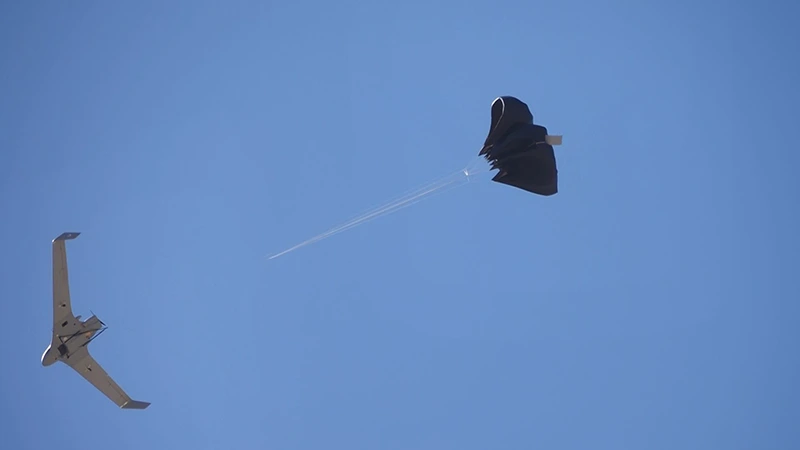
- Combat proven: integrated into a fielded UAV platform with thousands of successful deployments and zero failures.
- Reliable and scalable: robust yet ultra-light construction offers a new benchmark for UAV recovery systems.
Testing and validation
Extensive testing confirmed the parachute’s reliability under demanding operational conditions.
| Parameter | Value |
|---|---|
| Opening speed | 30 m/s |
| Payload weight | 75 kg |
| Opening shock | 2–3.5 g |
| Deployment record | Thousands of flawless uses on combat-proven UAVs |
Technical data per manufacturer documentation from APCO Aviation Ltd , as of 2026-09-22.