
Chemical fumes
A recovery system may remain exposed to fuel vapours, oils, hydraulic fluids and maintenance chemicals long before it ever deploys.
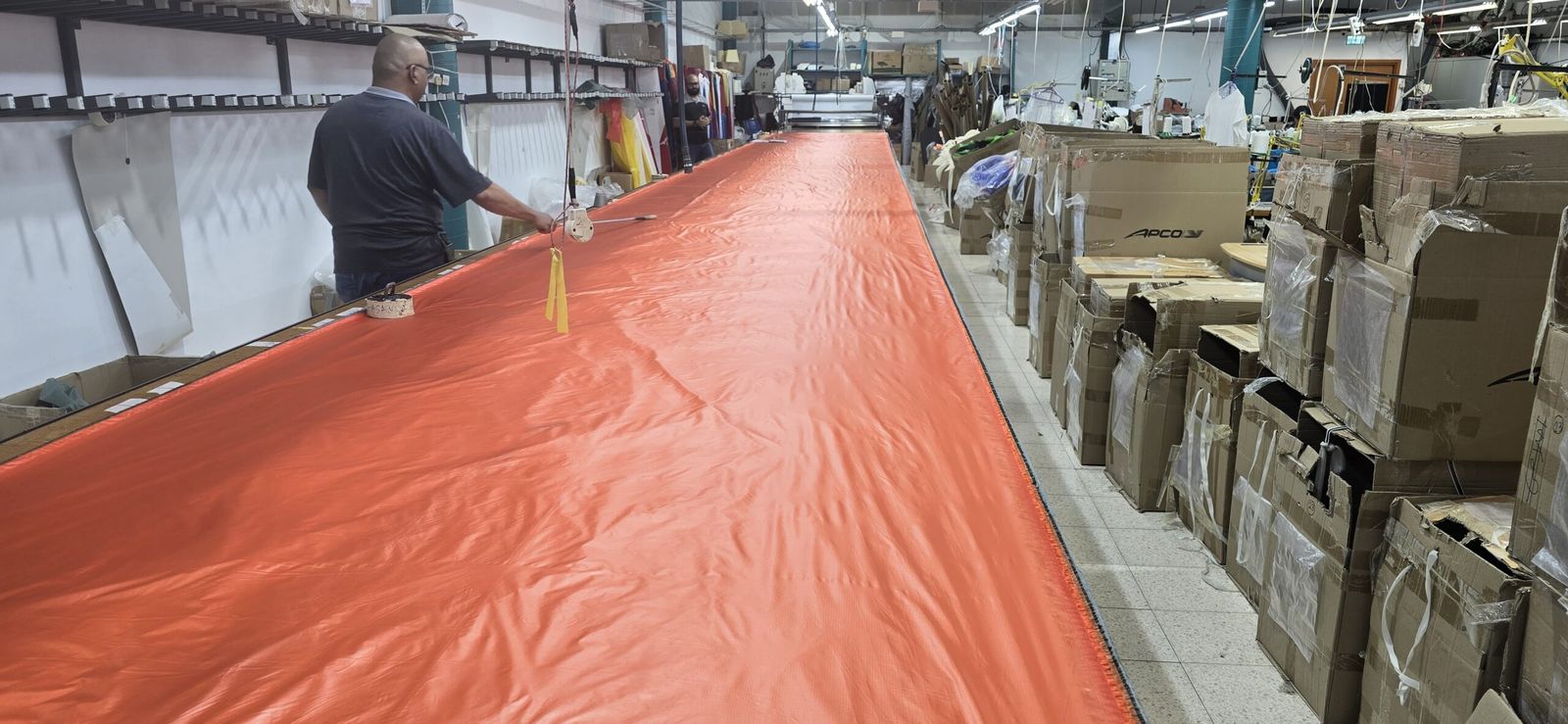
Preserving recovery performance through chemical exposure
APCO Aviation Defense develops recovery systems and defense textile solutions around the platform’s real operating environment, helping preserve material performance, deployment reliability and critical assets throughout storage, operation and recovery.

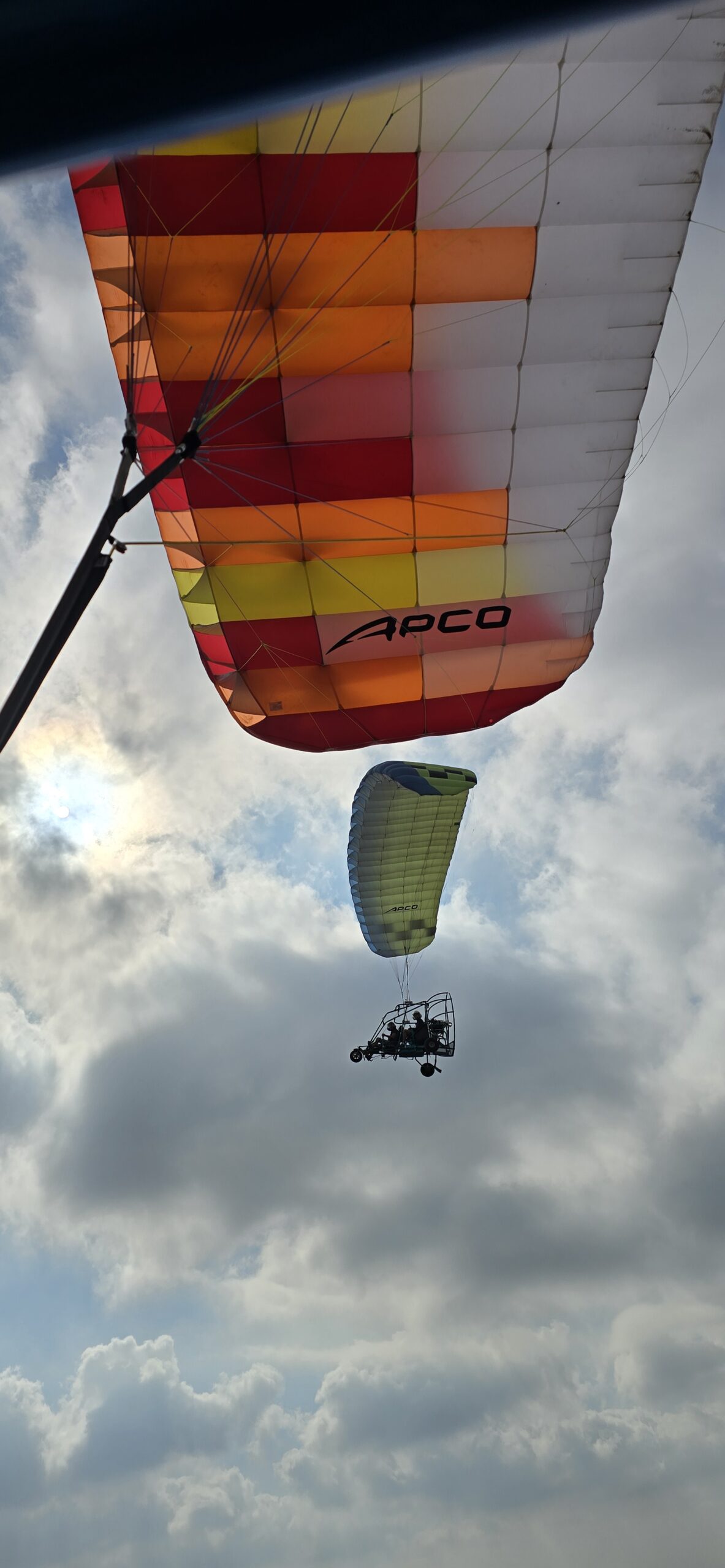
The environment acts before use
A parachute, airbag or other soft-goods system may remain packed inside an aircraft, UAV or aerospace platform for months or years. During that time chemical vapours can enter the compartment and gradually affect fabrics, coatings, stitching and components, even without direct liquid contact. Relevant exposure may include:
- Jet fuel fumes and fuel vapours
- Oils, grease and hydraulic fluids
- Solvents, degreasers and cleaning agents
- De-icing fluids and maintenance chemicals
- Exhaust residue
- Humidity, condensation and temperature cycles
Intact is not the same as functional
The system may still appear physically intact while changes to its material properties influence how it opens, carries loads and performs during recovery. That is exactly where the risk sits: the condition cannot be read from the outside.
Chemical resistance is a boundary condition
The purpose of the system is not chemical resistance — its purpose remains recovering and protecting the platform, payload or other critical asset. Chemical exposure is one operating condition among others: aerodynamic performance, weight and packing volume, deployment timing, opening loads, structural integrity, descent requirements, platform integration and required service life.
The recovery solution must continue to perform its primary function after the expected environmental exposure.
Materials, packaging and protection
There is no single material or protection method for every chemical environment. The correct solution may involve chemical-compatible textile materials, protective packaging, vapor barriers, protected compartments, removable covers or adapted deployment containers.
Material selection and packaging are considered together from the specification stage. The objective is to reduce unnecessary exposure while preserving weight, flexibility, packing volume, structural strength and deployment reliability.
Integration with the platform
Your team brings the platform, mission and environmental knowledge. APCO Aviation Defense brings recovery-system engineering, aerodynamics and defense textile expertise. Together, both teams define the chemicals involved, exposure duration, storage conditions, available packing volume, flight envelope, deployment speed and required recovery performance.
Where a standard off-the-shelf system is not suitable, APCO can develop a customized solution around the platform and its chemically saturated environment.
Designed around the complete operational cycle
Exposure may begin during storage or transportation and continue through fueling, servicing, maintenance, ground handling and flight operations. Temperature changes, pressure changes, humidity, vibration and repeated exposure cycles can increase chemical absorption and long-term degradation.
For this reason, the chemical environment should be defined from the beginning of the project, together with the platform, mission and recovery requirements.
From requirement definition to production
APCO Aviation Defense supports the complete development cycle, helping turn environmental and operational requirements into a practical recovery solution:
- Requirement definition: define the platform, chemical exposure and recovery requirements.
- Concept and design review: review materials, packaging, integration and technical approach.
- Prototype development: build the first solution for integration and evaluation.
- Testing and validation: test materials and system performance after chemical exposure.
- Production: prepare the validated solution for controlled manufacturing.
- Documentation: provide technical files, test records and required approvals.
- Maintenance planning: define inspection, repacking and replacement requirements.
- Support and lifecycle services: support system readiness, production and future adaptations.
Why APCO Aviation Defense
APCO Aviation Defense brings proven recovery-system and defense textile experience to platforms operating in unusual and chemically saturated environments. The company has developed UAV recovery solutions for platforms ranging from under 1 kg to more than 1,000 kg, demonstrating the ability to engineer around very different payloads, flight envelopes, deployment loads and integration requirements. This work is supported by:
- Aviation manufacturing experience dating back to the early 1970s
- A dedicated 3,200 m² in-house production facility
- Full-cycle capabilities from requirements and material selection through testing, documentation and production
- Experience developing parachutes, airbags, deployment systems and other defense textile solutions around platform-specific conditions
More than a chemically resistant material
APCO has the experience and material knowledge required to address abnormal chemical environments. Chemical exposure is considered from the specification stage, together with the system’s aerodynamics, weight, packing volume, deployment behavior and required service life.
The result is not simply a chemically resistant material. It is a complete defense textile recovery solution developed to remain reliable in its real operating environment, preserve critical assets and support mission continuity. From environmental requirement definition and material selection through protective integration, testing, documentation and production, APCO delivers complete recovery solutions.
- Products
- Deceleration parachutesUAV airbagsRelease mechanisms
- Platforms
- Fixed-wing UAVHelicopter & UAV engineering
Technical data per manufacturer documentation from APCO Aviation Ltd , as of 2026-07-30.