
Amphibious recovery
When it is unclear where the platform will come down, it has to be ready for both: landing on land and on water.

Keep critical assets safe on land and water
When recovery conditions are uncertain, a UAV or mission-critical platform needs to be ready for both land and water landing. APCO Aviation Defense develops amphibious textile recovery solutions that combine controlled descent, impact protection and flotation to help preserve UAVs, payloads and mission-critical systems until retrieval.
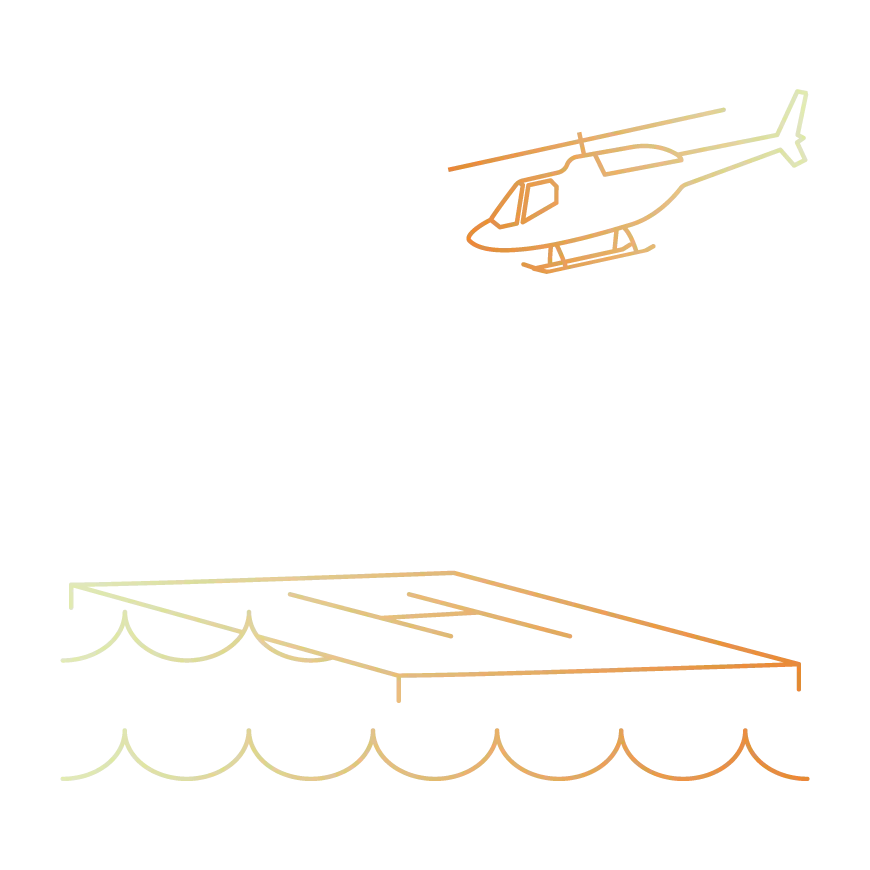
Built for uncertain recovery environments
Not every mission ends in a controlled landing zone. Platforms may come down on land, in water, or in areas where retrieval is delayed. An amphibious solution supports planned and emergency recovery, land and water landing conditions, platform and payload protection, full or partial flotation, air retention until retrieval, and drying, servicing and reuse.
How the parts work together
The amphibious system can be integrated with the parachute system or developed as a separate flotation solution. The parachute manages descent and impact protection; the amphibious textile element provides flotation after water landing, using active or passive inflation depending on mission and platform.
What feeds the design
Six quantities drive it: platform weight, size and density; required flotation volume; inflation method and timing; packing space and weight limits; aerodynamic forces; and expected time until retrieval. What happens after touchdown is as important as the descent itself.
When your platform lands on water
The system must keep the platform protected and afloat until retrieval. Both teams consider recovery time, weather, flotation duration, air retention, access, servicing and repacking. For reusable systems, the cycle must work from deployment through water retrieval and reuse.
Integration with the platform
Your team brings the platform and mission knowledge. APCO brings recovery, flotation, aerodynamics and textile engineering expertise. Together, both teams define the solution around the platform, payload and recovery environment. Where possible, the amphibious element is integrated into the parachute, allowing descent, impact protection and flotation to work together.
Textile materials that adapt to the mission
Amphibious recovery is not built around one standard material package. The right combination depends on the platform, flotation time, inflation method, loads and retrieval plan.
This is where textile engineering provides flexibility. Nylon, polyester, TPU, latex and other weldable materials can be integrated around the platform. Materials are selected to balance strength, weight, air retention, durability and reuse. Anti-corrosion treatments can be considered where metal hardware is exposed to water.
From requirement definition to production
Complex recovery projects move forward when both teams share the same understanding of the mission, platform and technical direction. Your team brings the platform and operational knowledge; APCO Aviation Defense brings recovery, flotation and textile engineering expertise. A clear process keeps everyone aligned through production:
- Defining requirements: align on the platform, mission, recovery environment, flotation needs and project limits.
- Prototype development: build the first physical solution for integration and technical evaluation.
- Testing and validation.
- Production: prepare the validated recovery solution for consistent manufacturing and inspection.
- Maintenance: a focused assessment of maintenance needs, repair options, upgrade opportunities and long-term asset serviceability keeps the systems ready for use.
- Manufacturing training: the knowledge, production files and QA support needed to manufacture recovery and protection systems externally.
- Documentation: clear, usable documentation that keeps the project moving forward.
- Support and lifecycle services: technical support after delivery to resolve system questions and confirm readiness.
Why APCO Aviation Defense
Our experience goes beyond adding a flotation device to a recovery system. It allows us to define how the platform must behave throughout descent, water contact, flotation and retrieval, and to translate those conditions into a lightweight, low-bulk recovery solution. In practice this means:
- Retrieval time drives the design. The expected time between water touchdown and recovery determines the required flotation duration, air retention, material selection and production approach.
- Flotation is defined around the required return condition. The total flotation volume is considered in relation to the platform and payload density, including whether the complete platform must remain above water or partial submersion is acceptable.
- Gradual air loss is designed into the solution. Inflatable volumes naturally lose air over time; the expected rate of air dissipation is considered when selecting materials, construction methods and the required flotation capacity.
- Aerodynamic loads are considered before water contact. When the flotation device is inflated during parachute descent, the solution must account for the aerodynamic forces acting on the inflatable structure and how those forces are distributed through its connection points.
- One inflatable element can support two environments. An airbag can act as an impact-protection element during a land landing and as a flotation device following a water landing.
- Corrosion requirements are based on actual exposure. For very short sea retrievals, corrosion may not be a significant design factor. Where metal hardware within the soft-goods system requires protection, anti-corrosion treatments or suitable materials such as Grade 316 stainless steel can be used.
- The amphibious element can become part of the recovery system. Where possible, APCO integrates the flotation element into the parachute or wider soft-goods package, supporting lower weight, lower bulk and more efficient use of the available packing volume.
What we need to know from you
Tell us what you need to protect, where the platform may land and how long it must remain afloat. Together, we can explore how these requirements can work as one defense textile solution.
- Products
- Inflatables & landing padsDeceleration parachutesRelease mechanisms
- Platforms
- Fixed-wing UAVCargo delivery · non-guidedMulti-rotor
Technical data per manufacturer documentation from APCO Aviation Ltd , as of 2026-07-30.